

The short version
Marketing without a strategy rarely fails loudly. It underperforms quietly, for months, on a budget nobody can judge.
Wasted spend is the visible cost. The bigger ones are the wrong customers, a message that changes with every channel, and a sales team chasing poor leads.
Four questions fix most of it, and they can be answered before another euro is spent.
Most marketing teams we meet are not short of activity. Posts go out on schedule, campaigns run, the newsletter lands every month and the website gets a refresh every few years.
Ask which of it brought in last year's best client, and the room goes quiet.
That silence is what marketing without a strategy sounds like. It rarely fails dramatically. It underperforms quietly, spending budget and management attention for months before anyone notices. Here is what it costs, and how to stop paying.
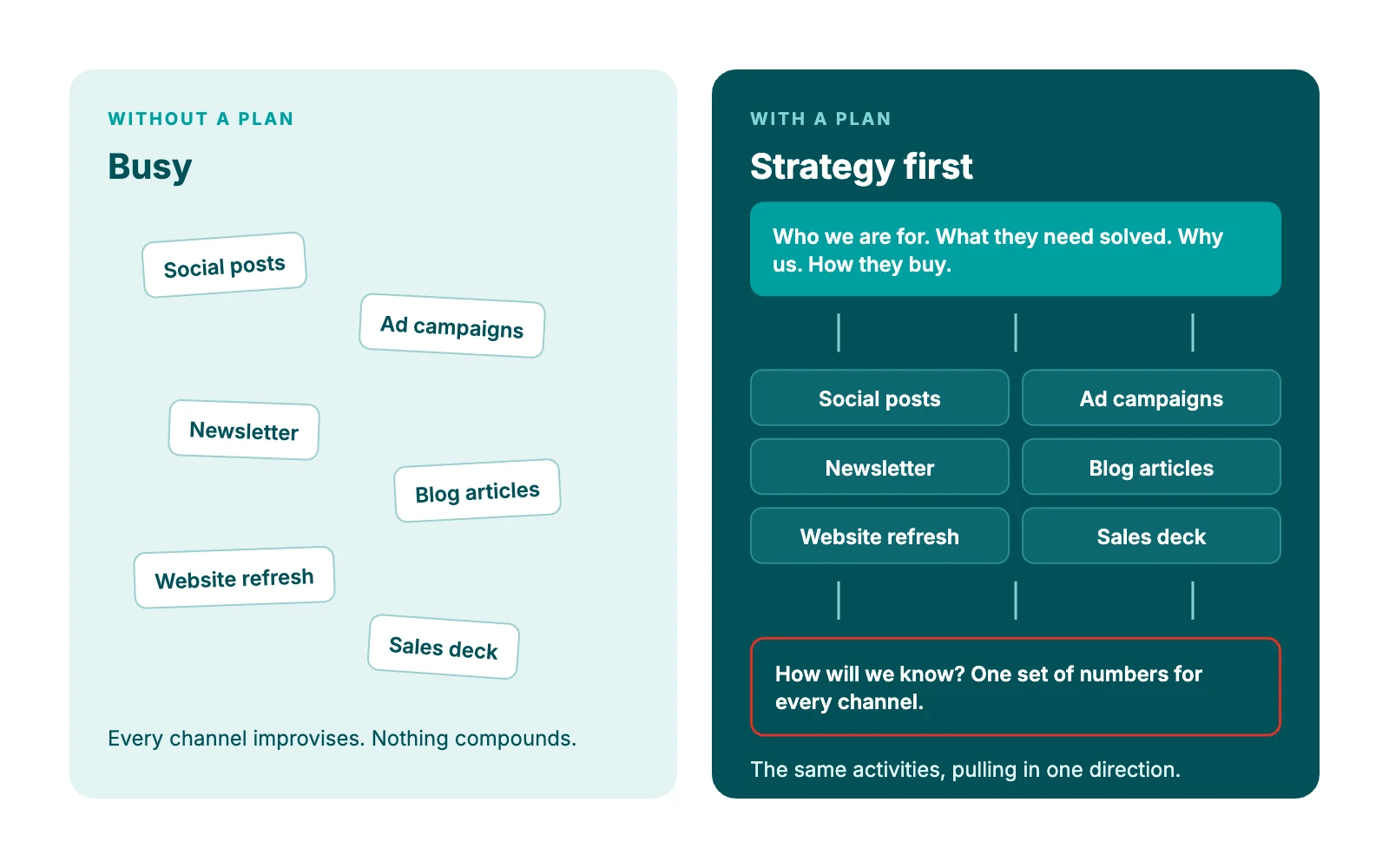
The same activities, with and without a plan connecting them.
A plan is not a strategy
A content calendar tells your team when to publish. An ad plan says where the money goes. A list of quarterly goals says what the business hopes for. All of them are useful. None of them is a strategy.
A strategy is the set of choices behind the activity. It answers a handful of commercial questions before anyone opens a design tool.
Who are we for? The customers with the most potential, described precisely enough to say no to everyone else.
What do they need solved? In their words, not ours.
Why us? The reason a buyer should choose you over the obvious alternative.
How do they buy? Where they look, who they ask and how long they take to decide.
What will it take? The budget, people and time needed to win them and keep them.
How will we know? The numbers that prove marketing is contributing to the business.
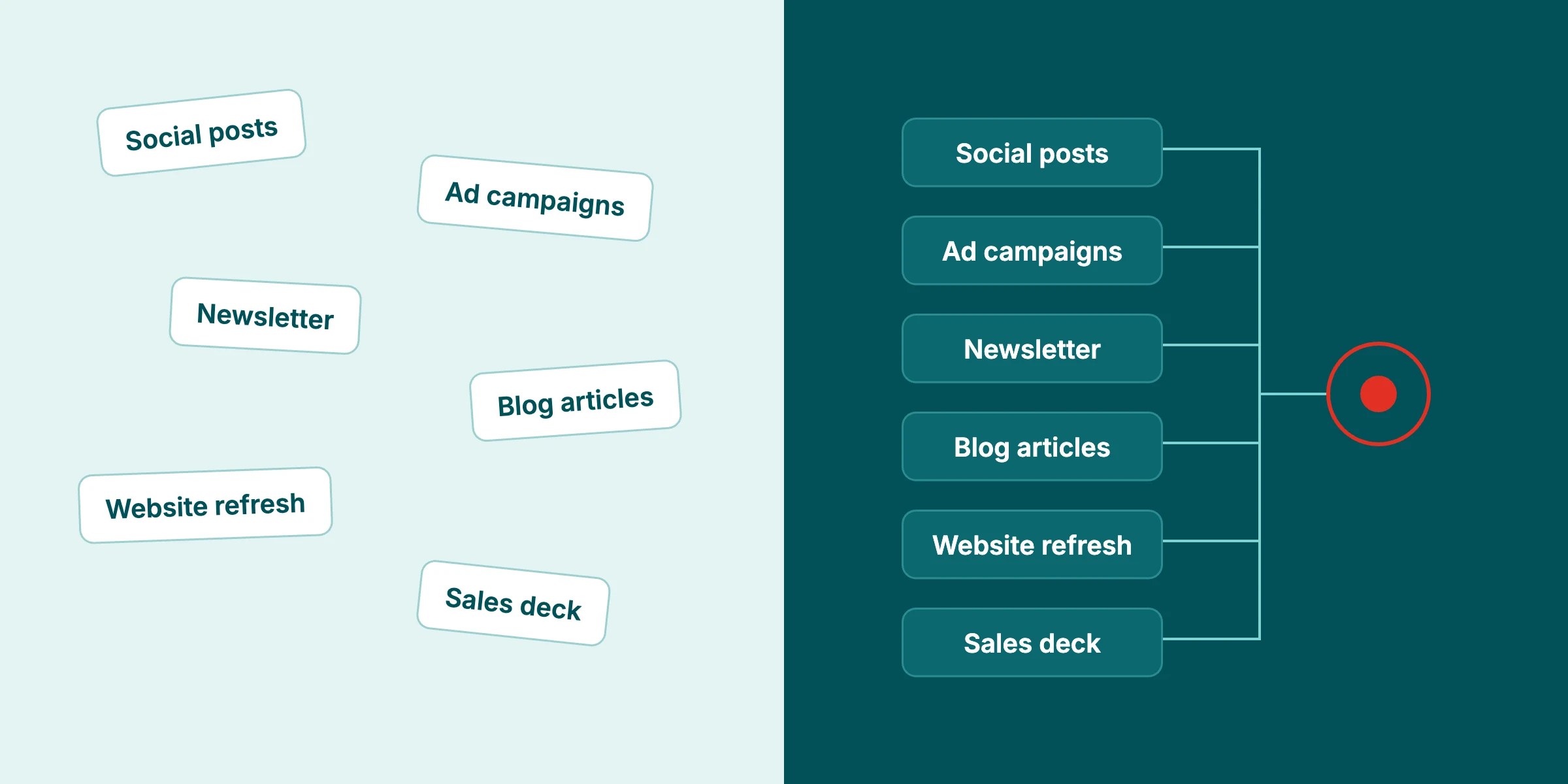
Without those answers, companies try to do too much, in too many places, with too little. That is marketing without a strategy: everyone stays busy, and nothing compounds.
Where the money leaks
The most visible cost is spend that goes nowhere. Ad budgets spread across platforms before anyone knows which audiences matter. Articles commissioned with no search or sales purpose. Software subscriptions that overlap.
Each one looks small. Together they add up quickly.
Take a company spending €5,000 a month on marketing. If a quarter of it goes on activity that contributes little, that is €1,250 a month, or €15,000 a year. It is an illustration, not an industry average. Still, most marketing leads, asked honestly, can name their own version of it.
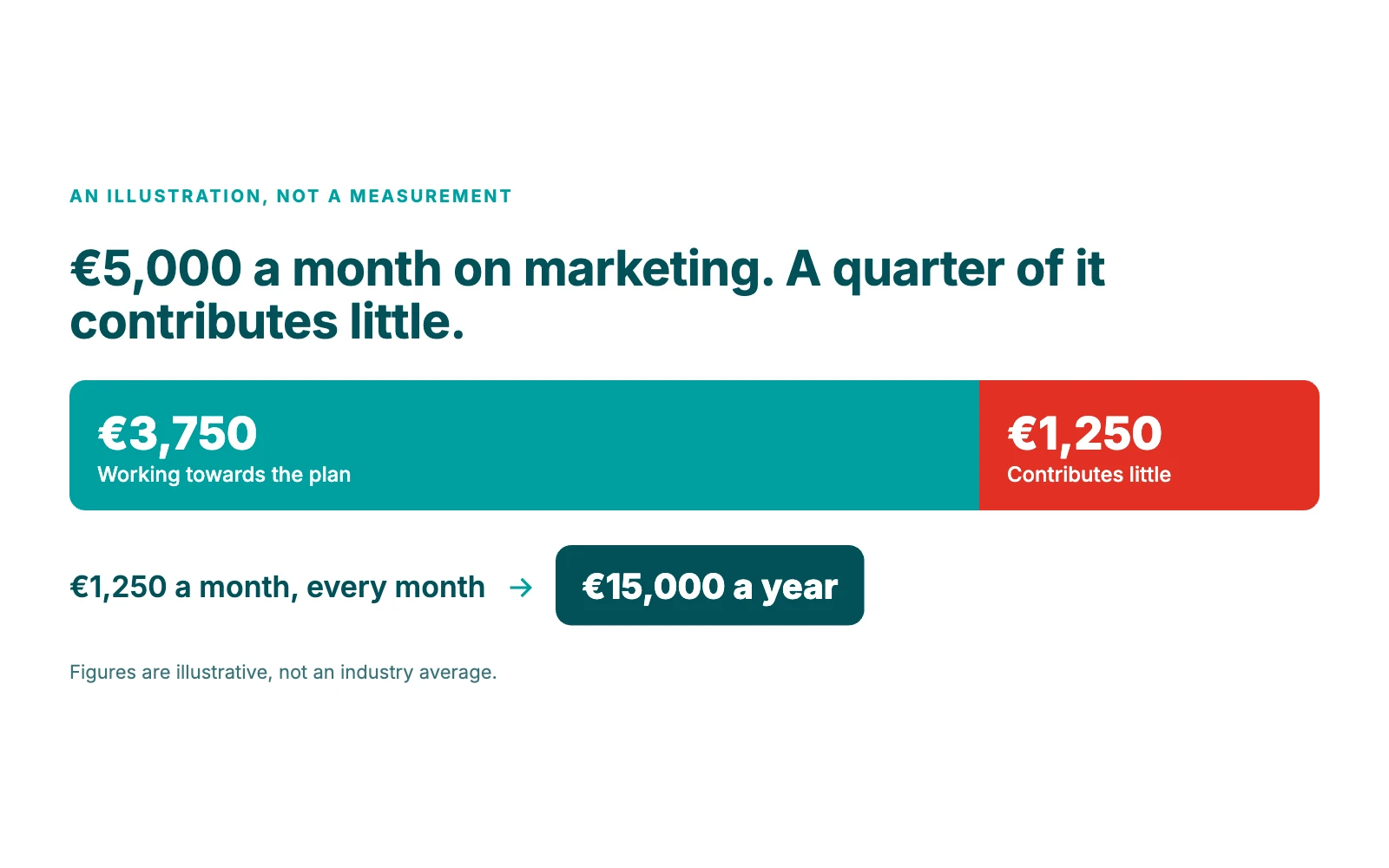
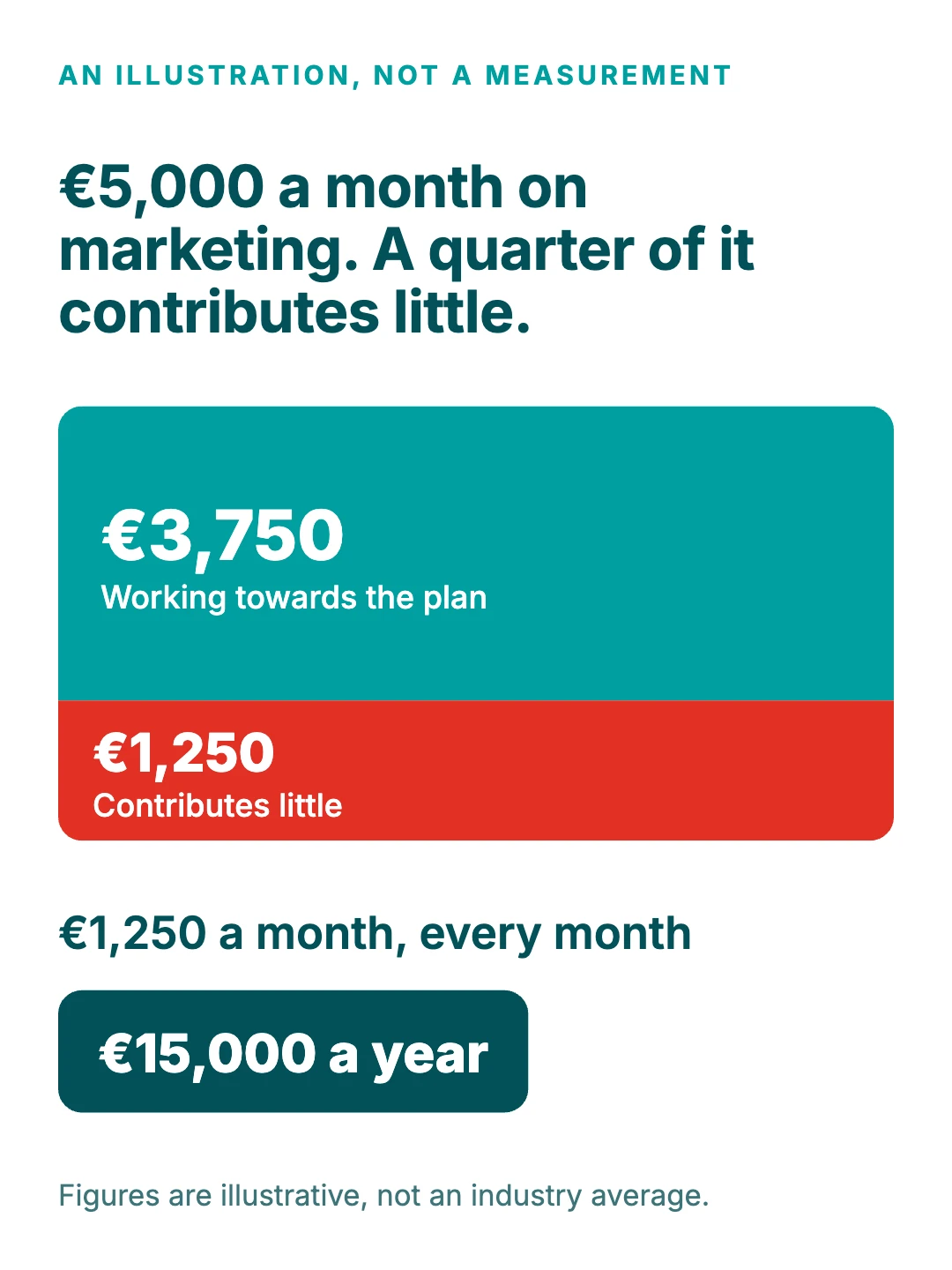
An illustration, not a measurement: what a quarter of a €5,000 monthly budget looks like when nobody can say what it bought.
The wrong customers cost more
The bigger leak is aiming at people who will never buy. Marketing reports a strong month for leads. Sales reports that the leads are poor. Both are right, because nobody agreed what a good customer looks like.
“Every lead that doesn't fit costs a salesperson an afternoon.”
A useful customer profile goes beyond sector and size: contract value, buying process, who signs, how complex the need is and where they are. A freight forwarder built for complex international moves gains little from marketing to companies with simple domestic deliveries. A specialist consultancy gains little from buyers shopping on price alone.
Every lead that doesn't fit costs a salesperson an afternoon. Multiply that by a year and the waste dwarfs the media budget.
Marketing without a strategy sounds generic
When nobody has decided how the company should be understood, every channel improvises. The website says one thing. LinkedIn says another. The ads introduce a third, and the sales deck changes with whoever is presenting.
Buyers then have to work out what you do on their own. Most won't bother. Meanwhile every campaign starts from zero, because the market never heard the same message twice.
Strong positioning gives you continuity. The words can change between a LinkedIn post and a proposal. The proposition shouldn't.
It also frees the sales team. When marketing attracts the right people and the website answers their basic questions, salespeople stop explaining the company and start selling it.
Reacting is not planning
Sales dip, so the company buys ads. Traffic falls, so someone orders a batch of articles. A competitor gets busy on LinkedIn, so the team starts posting daily.
Each move is reasonable on its own. Together they guarantee that nothing runs long enough to work. Search, content and brand all need months before their contribution shows. Change direction every quarter and you never find out what would have worked.
A simple planning rhythm fixes most of it.
Once a year: the markets, the commercial targets and the position you want to own.
Every quarter: the few campaigns and improvements most likely to hit those targets.
Every month: the execution, the reporting and the small corrections.
Measure progress, not activity
Impressions, clicks, followers and sessions are signals. They are not proof. The questions that matter sit further down the line: how many of the right visitors enquired, what each qualified opportunity cost, and which articles led to a conversation.
Attribution in B2B is never perfect. Long sales cycles, referrals and phone calls blur it. However, imperfect but disciplined reporting still beats a drawer full of dashboards nobody reads.
The same goes for suppliers. Specialists in ads, SEO, design and the website can each do good work and still pull in different directions, because nobody owns the overall plan.
Four questions before any budget
A strategy doesn't need to start as a hundred-page document. It starts with four questions, answered honestly by the people who run the business.
1. Who exactly is it for? Name the segments with the best fit, then write down their problems, their objections and how they buy.
2. What should change because of it? More qualified enquiries, a new market, better retention or a lower cost to win a client. Never followers on their own.
3. Which channels earn their place, and which don't? Choose by how your buyers research and buy. An industrial supplier may live on search, technical content and LinkedIn. A restaurant group may live on local search, Instagram and repeat guests.
4. How will we know it worked? Agree the numbers before the spend, and keep some budget for measurement and correction instead of putting every euro into production.
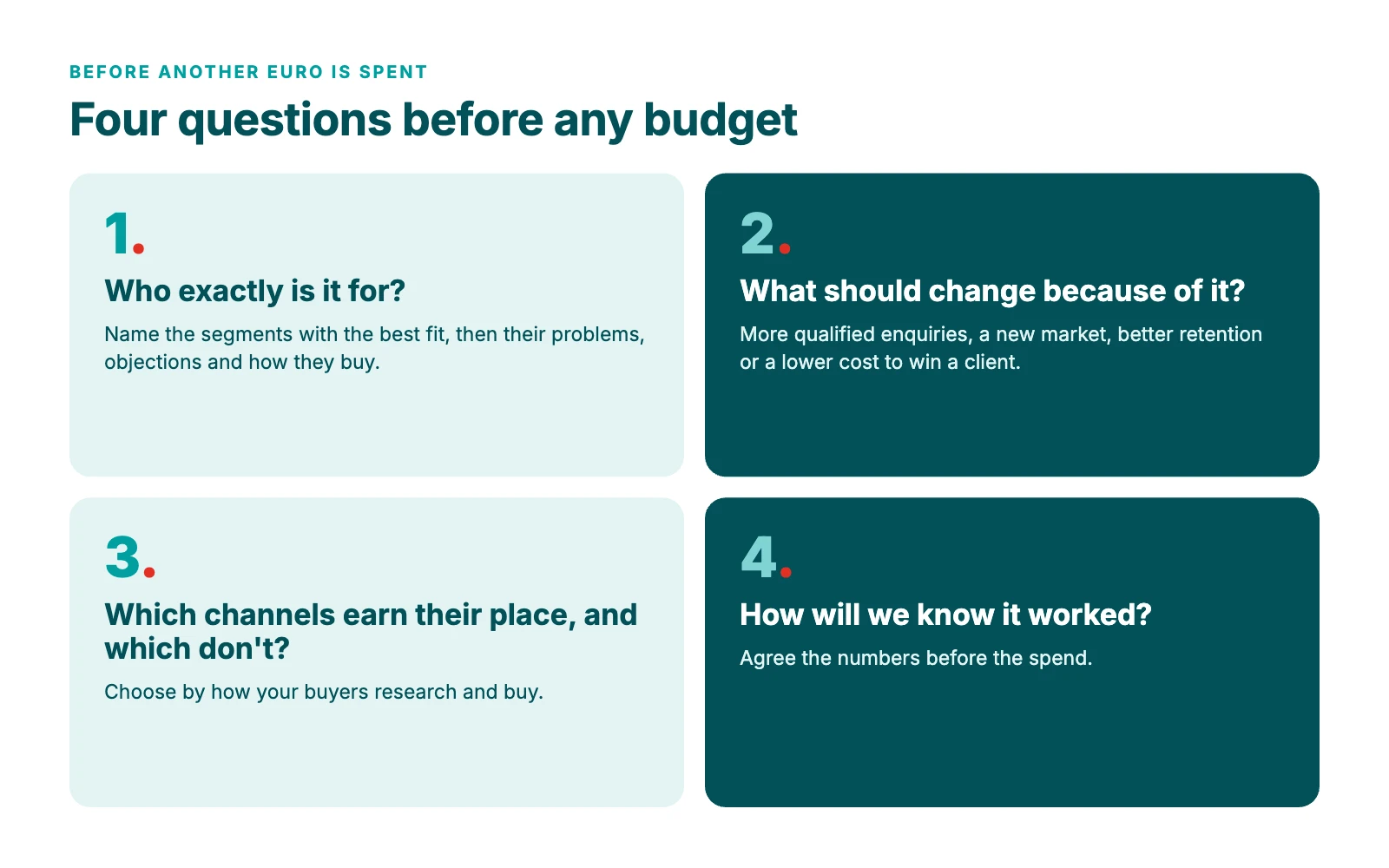
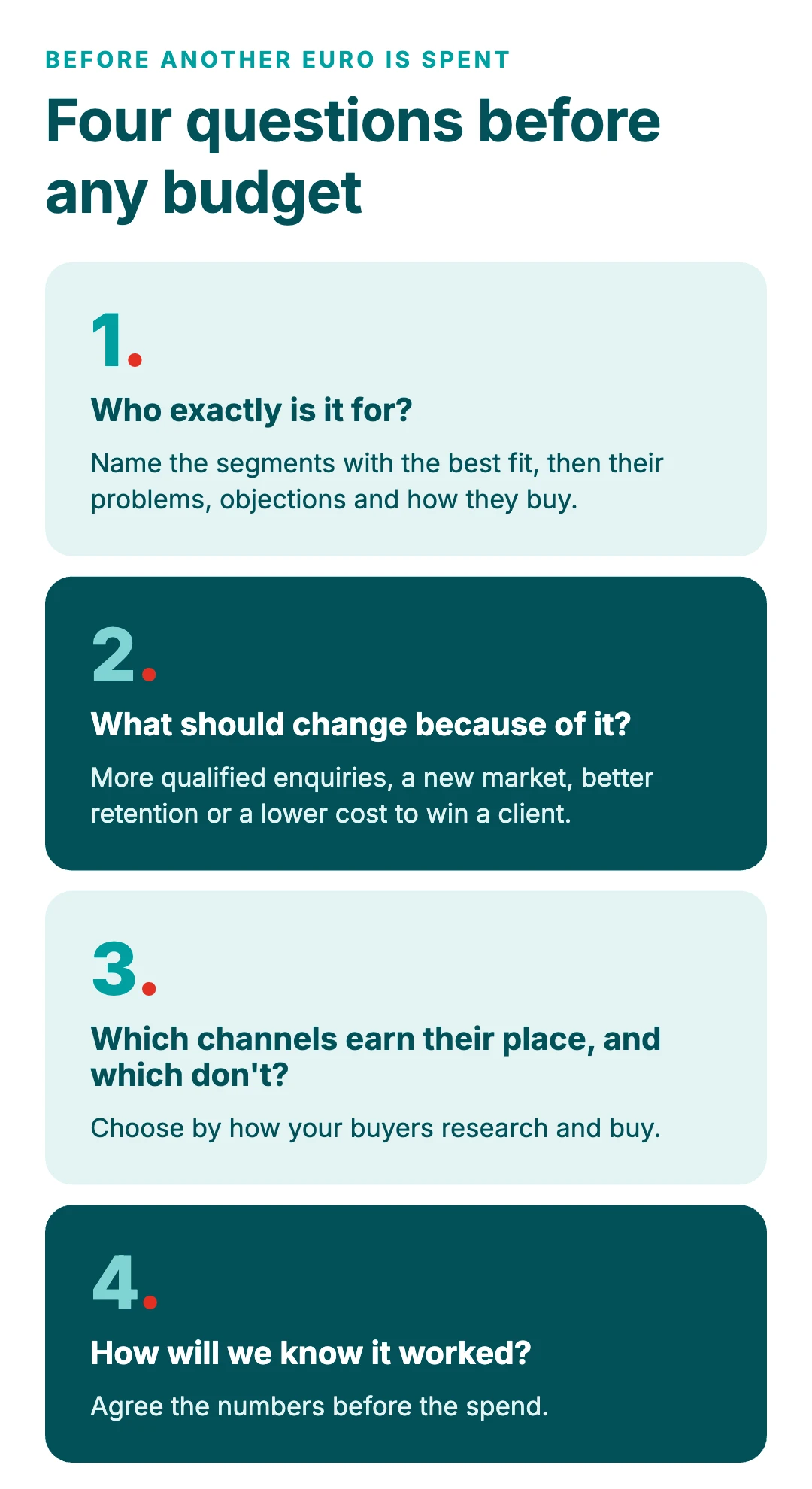
Four questions, answered before another euro is spent.
Then review monthly for the small changes and quarterly for the big ones. A strategy should guide decisions, not freeze them.
If you want an outside view first, our Growth Snapshot shows where your current marketing works and where it leaks, benchmarked against three competitors you name.
Busy feels safe. It isn't. The companies that grow are the ones that decided, before they spent, what the spending was for.